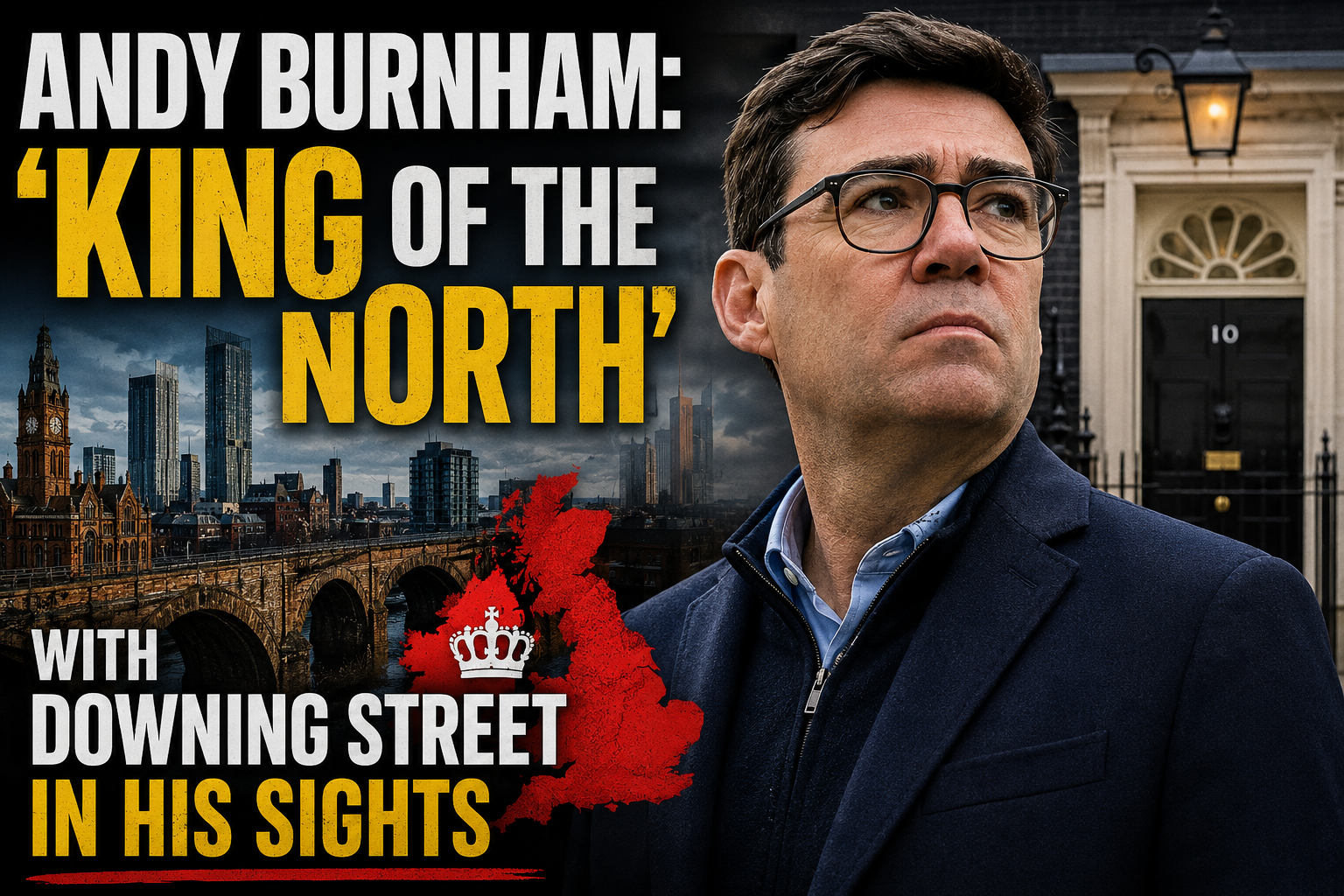
Andy Burnham, the long-serving mayor of Greater Manchester and one of the Labour Party’s most recognizable figures, is once again at the center of British politics. Widely known as the “King of the North,” Burnham is now emerging as the leading contender to take Labour’s top job following Prime Minister Keir Starmer’s decision to step down, marking a dramatic shift in the UK’s political landscape.
Burnham’s rise reflects years of building a political identity centered on regional empowerment, public services, and advocating for communities outside London. His supporters argue that his experience in local government and his strong connection with northern England make him well-positioned to lead both the Labour Party and the country.
From Westminster to Manchester
Born in northwest England, Burnham entered Parliament in 2001 after studying at the University of Cambridge. During the Labour governments led by Tony Blair and Gordon Brown, he held several senior ministerial positions, including Health Secretary.
Despite twice falling short in Labour leadership contests, Burnham chose a different path by leaving Westminster to run for Mayor of Greater Manchester in 2017. That decision transformed his political career.
As mayor, Burnham focused on improving transport, housing, policing, and economic development. One of his flagship achievements has been the expansion of the Bee Network, an integrated public transport system designed to bring buses, trams, and cycling infrastructure together under local control. His leadership has often been praised for putting local communities ahead of party politics.
Why He Is Called the ‘King of the North’
Burnham earned the nickname “King of the North” during the COVID-19 pandemic after publicly challenging then-Prime Minister Boris Johnson over financial support for northern England.
His outspoken criticism of what he described as a London-focused approach resonated with many residents across northern regions. While the nickname began as a media label inspired by popular culture, it gradually became associated with Burnham’s image as a defender of regional interests.
Since then, he has continued to campaign for greater devolution, arguing that local governments should have more power over transport, healthcare, housing, and economic policy.
Leadership Ambitions Grow
Burnham’s political ambitions have long been the subject of speculation, but recent developments have placed him firmly in the national spotlight.
Following his return to Parliament through a by-election victory, political analysts believe Burnham has become the clear favorite to succeed Starmer as Labour leader. Several senior Labour figures have reportedly backed his leadership bid, reducing the likelihood of a prolonged internal contest.
His supporters believe he can reconnect Labour with working-class voters while also appealing to moderate and centrist voters who have become increasingly dissatisfied with mainstream politics.
A Different Vision for Britain
Burnham has repeatedly argued that Britain’s economy needs to be rebalanced, with greater investment directed toward towns and cities outside London.
He often speaks about extending what he calls the “Manchester model” across the country—a strategy focused on devolved decision-making, improved public transport, stronger local economies, and increased cooperation between local authorities.
According to Burnham, national prosperity depends on giving every region the tools to grow rather than concentrating investment in the capital.
Political observers say this regional approach could become the defining feature of any future Burnham government.
Challenges Ahead
Despite his popularity, Burnham also faces significant challenges.
Critics argue that managing Greater Manchester differs greatly from governing the entire United Kingdom. They question how he would finance ambitious spending plans while maintaining fiscal discipline.
Others point out that Burnham has yet to present a comprehensive national economic strategy, leaving questions about taxation, public spending, and business policy unanswered.
Within Labour, some members have also called for a competitive leadership race to allow greater scrutiny of his proposals before any leadership transition takes place.
A Defining Moment
For many Labour supporters, Burnham represents an opportunity to reset the party after a difficult period marked by declining public support and internal tensions.
His relaxed communication style, emphasis on regional equality, and reputation as an effective local leader have helped distinguish him from many traditional Westminster politicians.
Whether that popularity can translate into national electoral success remains one of the biggest questions in British politics.
If Burnham secures the Labour leadership, he will face the immediate challenge of rebuilding voter confidence, managing the economy, and preparing the party for the next general election.
As political uncertainty continues in Westminster, Andy Burnham’s journey from Greater Manchester’s mayor to a potential occupant of 10 Downing Street appears closer than ever. The coming weeks are expected to determine whether the “King of the North” can successfully make the transition from regional leader to national prime minister.